



You design a flexible lecture capture system by setting clear flexibility goals first. You then select compatible Lecture Recording Cameras and AI tracking tools. Next, you plan a scalable architecture. Finally, you test everything before deployment. A hybrid classroom AI tracking camera, for example, follows a presenter automatically and cuts manual work. Each choice shapes how well your lecture capture handles different rooms and teaching styles. Scalability and accessibility goals belong in that plan from day one. Vendors such as WINSAFE Technology simplify multi-camera AI tracking integration. Good lecture capture also depends on early planning, not on hardware you add later.
Key Takeaways
-
Define your flexibility goals first. This step shapes every later choice.
-
Match cameras to room size and teaching style. A large hall needs different gear than a small room.
-
Plan for growth from day one. A tiered approach keeps costs low and options open.
-
Test your system before live classes. This prevents surprises and ensures smooth operation.
-
Choose hardware that integrates with your existing AV setup. This avoids vendor lock-in and saves money.
Defining Flexible Lecture Capture Requirements
Flexibility starts with honest answers about your rooms. A 4K Lecturer Tracking PTZ Camera suits a large hall, while a USB Lecturer Tracking PTZ Camera fits a small breakout space. Match the hardware to the space before you buy anything.
Assessing Rooms and Teaching Styles
Room size, seating layout, and teaching style drive your camera count and audio design. Use the table below as a starting filter.
|
Room size / space type |
Teaching style |
Camera and audio implication |
|---|---|---|
|
Lecture hall (40+ seats) |
One-way lecture capture and streaming |
Multi-camera rig; lapel or podium mic, not the room mic |
|
Standard classroom (20–35 students) |
Live teaching with remote students |
Single forgiving device; room-wide coverage and strong far-end audio |
|
Small classroom (4–10 people) |
Small-group sessions |
Room-wide audio pickup; avoid setup friction and echo |
|
Meeting room (6–18 people) |
Staff meetings, board calls |
Keep people in frame; prevent muffled speech across the table |
A key rule applies here. If you need capture, buy for capture. If you need live hybrid interaction, buy for interaction. When both matter in one room, prioritize interaction, because a camera good enough for live hybrid teaching produces acceptable capture, and the reverse rarely holds true.
Teaching style also changes camera behavior. Lecture-style presentation works well with a PTZ camera in motion tracking mode. Round-table seminars need voice tracking, where the camera switches between speakers. Hybrid sessions often use picture-in-picture so remote students see the presenter and the whole space.
Setting Scalability and Budget Goals
Plan for growth across rooms, not just one installation. A tiered approach keeps costs sane. Tier 1 covers a single teacher with a wide-angle USB webcam and a USB conference microphone. Tier 2 adds a PTZ camera with a 6-mic array for weekly hybrid seminars. Tier 3 serves large halls with multiple cameras, a ceiling microphone array, and dedicated AV support.
Automated lecture capture can start and stop recording based on scheduled classes. That feature reduces manual intervention and frees your staff. Your flexibility goals should also cover LMS integration, captioning, and searchable content, so your lecture capture platform meets accessibility standards. Look for ada-compliant lecture capture tools when you compare vendors.
Scalable multi-room deployments need central management. WINSAFE Technology supports this kind of rollout, and their hardware works across several room types. Set your budget around the tier you need today, then confirm the path to the next tier.
Core Components for Lecture Recording
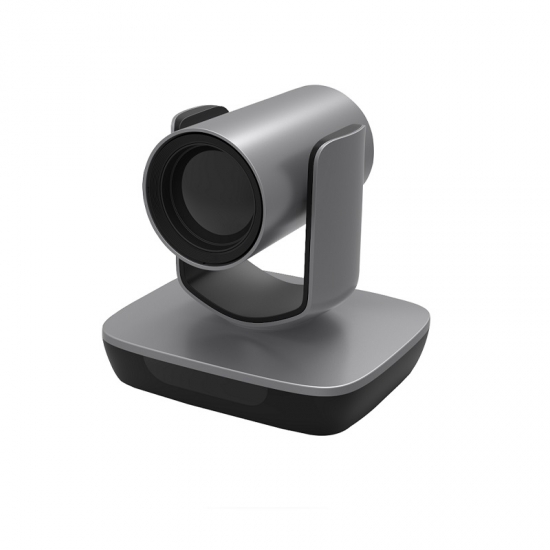
Your lecture recording cameras form the foundation of the entire system. You have three main types to consider. PTZ cameras offer motorized pan, tilt, and zoom control for following a presenter across a stage. Fixed cameras provide stable, wide-angle coverage of a room or audience. 360° cameras capture the entire space in one lens, letting you reframe the view digitally during playback. For most rooms, you will combine these types. Place a PTZ camera at the back of a lecture hall for presenter tracking. Mount fixed cameras at the front corners for audience reaction shots. Position a 360° camera on the ceiling for seminar-style discussions where people sit in a circle.
When you select lecture cameras for different spaces, match the model to the room size. A 4K Lecturer Tracking PTZ Camera works well in large halls where you need crisp detail on slides and presenter gestures. A USB Lecturer Tracking PTZ Camera suits smaller classrooms where you want plug-and-play simplicity without dedicated video infrastructure. Both options give you motorized tracking without requiring a human operator behind the lens.
AI Tracking and Lecture Capture Software
Modern AI tracking removes the need for manual camera operation entirely. A Hybrid Classroom AI Tracking Camera detects the presenter through face or body recognition first. It then establishes a framing zone that defines where the subject should sit compositionally within the shot. The camera only drives its motors when the presenter moves outside this zone. This prevents constant micro-adjustments that would make viewers feel seasick. The system also predicts movement patterns to handle natural pacing behavior without visible lag. Your remote students see smooth transitions instead of jerky camera hunting.
The same edge-intelligence-driven approach powers multi-speaker scenarios. When someone else starts talking, the view shifts to them automatically. Remote attendees can track who is speaking without asking anyone to move a camera. This makes video lecture recording feel professional even when no production staff exists on site.
Audio capture deserves equal attention. Ceiling microphone arrays pick up speech across a wide area for seminar rooms. Lapel microphones deliver clearer audio for single-presenter lectures. You want speech that remains intelligible even when someone faces the whiteboard.
Selecting Lecture Recording Cameras
Your lecture capture hardware ties everything together. Hardware encoders accept feeds from your lecture recording cameras and process them into recordable streams. The Pearl-2 encoder supports six or more inputs at 4K resolution with up to six encoded channels. The Pearl Mini handles three HD inputs with three encoded channels for smaller deployments. The Pearl Nexus offers three HD inputs in a compact 1RU form factor ideal for rack-mounted installations. The Pearl Nano provides two 4K inputs as a single-channel encoder for simple setups.
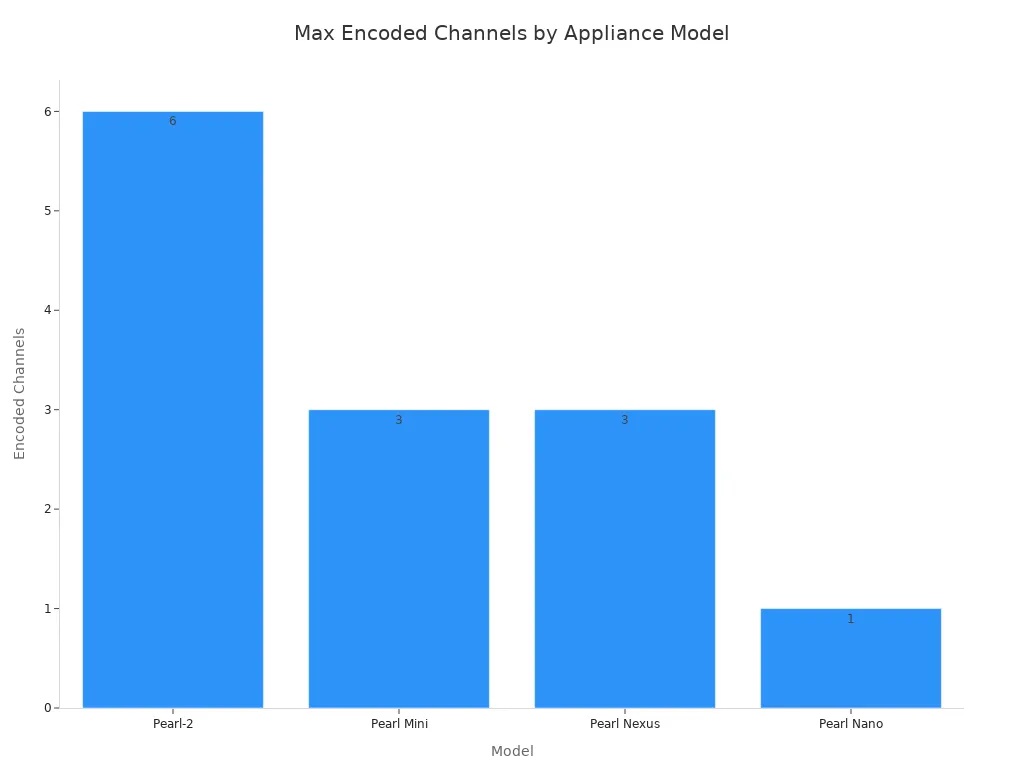
These encoders let you capture several streams simultaneously from different sources. You can record a PTZ camera feed, a document camera showing handwritten notes, and a laptop output with presentation slides all at once. Capture cards like the AV.io SDI+ accept SD-SDI, HD-SDI, and 3G-SDI signals up to 1080p resolution for connecting professional cameras.
Your lecture capture software manages recording schedules, multi-source recording workflows, and output formats. Good software supports HD and SD recording simultaneously. It should handle document cameras as input sources alongside your main cameras. Look for ai-powered features like automatic speaker identification and scene detection that simplify post-production editing.
Software-based lecture capture gives you flexibility without dedicated hardware investment. You can run it on existing classroom computers while still supporting multiple input sources through USB capture cards.
Designing Scalable Lecture Capture Architecture
Your lecture capture architecture must handle multiple rooms, varied camera counts, and different signal types without forcing a complete redesign. The interface choices you make today determine how easily you expand tomorrow.
Interface Compatibility and Signal Flow
Every lecture recording camera you select speaks one or more interface languages. The table below shows how each interface shapes your installation.
|
Interface |
Role in Scalable Multi-Camera Lecture Capture Architecture |
|---|---|
|
3G-SDI |
Delivers digital video over coaxial cabling directly to broadcast switchers or SDI infrastructure |
|
HDMI |
Feeds local monitoring setups or video presentation hardware |
|
USB |
Provides connectivity directly to host capture systems |
|
IP |
Routes stream data across local area networks or wide-area infrastructure for multi-camera PTZ control |
Cable run length matters as much as connector type. HDMI reaches roughly 15 meters passively. SDI extends up to 200 meters over RG59 or RG6 cable. USB 3 manages about 3 meters without active extenders. IP over Ethernet runs 100 meters on Cat 5 or Cat 6 cabling. For large lecture halls, SDI or IP gives you the reach you need. For small classrooms, USB offers plug-and-play simplicity. USB Lecturer Tracking PTZ Cameras connect directly to a host computer without dedicated video infrastructure, making them ideal for compact spaces.
SDI connectors feature a locking mechanism, making them the more secure way to connect your equipment. In addition, SDI can carry signals over longer distances than HDMI.
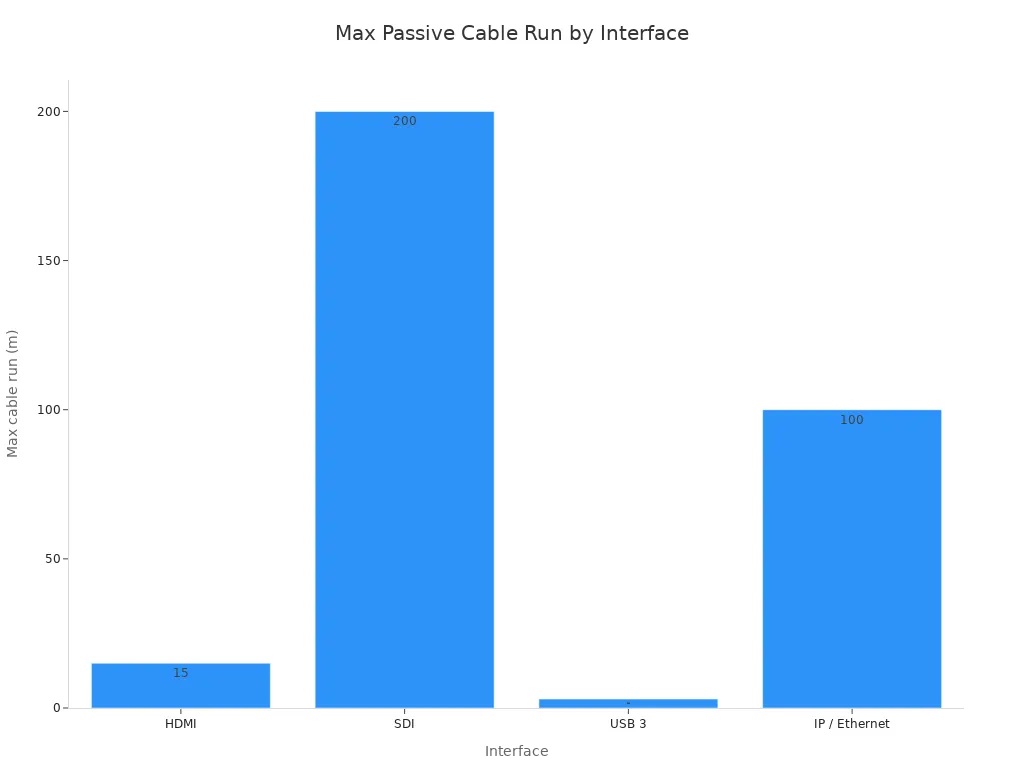
The signal flow follows a clear path. Cameras and microphones capture video and audio. A capture card or appliance formats those signals for your computer or network. Recording and encoding software manages simultaneous streams, such as teacher video and slide content, and encodes them into one synchronized file. That file moves to secure cloud storage with time-stamped indexing. Finally, a distribution platform with access controls delivers the content to students through your LMS.
Power over Ethernet simplifies the physical setup. PoE delivers video streams, control signals, tally indicators, and operational power over a single network cable. This reduces cable clutter in lecture halls while enabling structured multi-camera PTZ control over local IP networks.
Network, Remote Management, and Integration
Your network backbone must support the traffic your cameras generate. A 1080p camera using H.264 compression consumes 1-4 Mbps. A 4K camera needs 4-16 Mbps with H.264, or 4-6 Mbps with H.265. For eight 1080p cameras recording locally, plan for 16-32 Mbps on your internal network. Cloud upload requires 8-16 Mbps constant. Add a 30-40% buffer to your calculated bandwidth for future growth. Use Cat6 or Cat6a cabling, enterprise-grade switches with PoE+, and a dedicated VLAN for your lecture capture traffic.
Centralized remote management keeps your technical setup under control across campus. You monitor device status, schedule startup and shutdown, apply consistent room settings, and reduce onsite troubleshooting. Complete remote content control lets you configure settings, start or stop streams, and verify video feeds from any location. 24/7 device monitoring tracks temperature, storage, and system load. Customized alerts notify you immediately when signal failure or system load problems occur.
Your lecture capture hardware should integrate with existing AV infrastructure rather than replace it. AV over IP transmits audio and video across the campus network instead of traditional cabling, simplifying distribution between buildings. Software-only platforms like Utelogy connect every AV and UC device to a single interface, giving IT teams real-time monitoring, remote control, and automated testing without equipment replacement.
WINSAFE Technology supports this flexible, scalable approach. Their hardware works across multiple room types and interface standards, so you avoid vendor lock-in while building a lecture capture platform that grows with your institution. A Hybrid Classroom AI Tracking Camera, for instance, integrates smoothly into this architecture, following presenters automatically while your network handles the stream. The most flexible lecture capture systems start with interface planning, not hardware accumulation.
Implementing and Optimizing Lecture Capture
Step-by-Step Deployment Guide
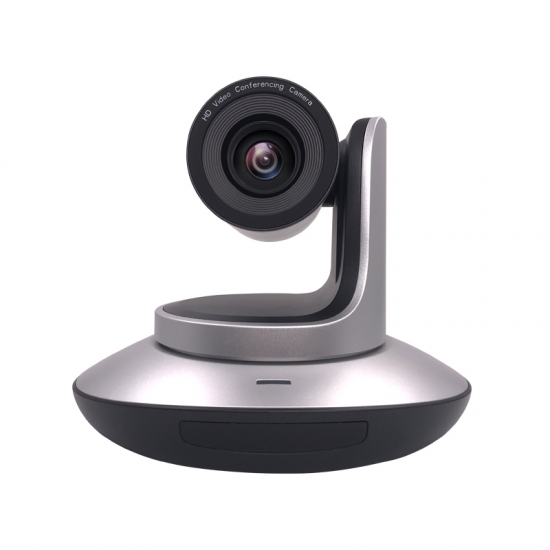
Start with a thorough site assessment. Review each classroom's layout, existing AV equipment, and network readiness. Create a tailored deployment plan for every space. This step prevents surprises during installation and helps you match 4K Lecturer Tracking PTZ Cameras to each room's specific needs.
Follow these deployment steps for a smooth rollout:
-
Conduct a site assessment to review classroom layouts, current AV equipment, and network readiness, then create a tailored deployment plan.
-
Design and install the system infrastructure needed for high-quality recording and dependable data transmission.
-
Provide faculty onboarding and training on operating recording tools, managing content, and using analytics.
-
Offer ongoing support to maintain equipment, resolve technical issues, and apply updates as the technology changes.
During installation, mount your cameras strategically. Place a 4K Lecturer Tracking PTZ Camera at the back of a lecture hall for wide presenter coverage. Install a USB Lecturer Tracking PTZ Camera in smaller rooms where plug-and-play simplicity matters. Run cabling with proper length planning—SDI reaches up to 200 meters, while HDMI works only within 15 meters. Configure your lecture capture software to handle scheduling through your LMS. Systems like EchoVideo integrate with Canvas, Blackboard, Moodle, and D2L/Brightspace after API configuration. This automation lets recordings start and stop based on your class schedule without manual intervention.
Testing, Troubleshooting, and Tuning
Test your AI tracking accuracy before the first live session. Have a presenter walk the full teaching area while you watch the camera follow smoothly. Verify audio pickup from every seating zone. Check multi-camera switching between your presenter camera, document camera, and slide input. A Hybrid Classroom AI Tracking Camera should predict movement patterns and avoid constant micro-adjustments that cause viewer discomfort.
Troubleshoot common issues systematically. Tracking loss often occurs when the presenter moves behind furniture or wears clothing that blends with the background. Latency problems usually trace back to network bandwidth—remember that eight 1080p cameras need 16-32 Mbps on your internal network. Interface mismatches happen when you connect HDMI sources to SDI infrastructure without proper converters.
Optimize your lecture capture platform for both live streaming and on-demand viewing. Modern hardware innovations reduce operational burden on faculty. Cloud-based platforms enable seamless storage and distribution across multiple devices. The table below shows how different components enhance your delivery.
|
Capability |
How it optimizes live streaming and on-demand viewing |
|---|---|
|
4-in-1 media processor |
Supports recording, switching, mixing, and live streaming simultaneously, enabling one-button live stream and recording of lectures. |
|
Auto-tracking camera |
Automatically follows and centers a moving instructor without requiring an operator, improving live capture quality. |
|
PTZ cameras |
Allow remote pan, tilt, and zoom control so operators can adjust views during live sessions. |
|
Document cameras |
Capture real-time images of books or objects and display them on screen. |
|
24/7 online review |
Recorded lectures let students review captured course material anytime and anywhere. |
Set up captioning and transcription for accessibility. AI-powered transcription tools generate searchable text automatically. This makes your video lecture recordings compliant with accessibility standards and helps students find specific topics quickly. Your technical setup should include regular maintenance checks and firmware updates. Monitor device status centrally to catch signal failures before they affect classes. With proper testing and tuning, your lecture capture hardware delivers reliable performance across every room in your institution.
You now have a clear path. Define flexibility goals first. Then select compatible lecture recording cameras and AI tracking. Next, build a scalable architecture. Finally, test everything thoroughly. Flexibility comes from planning interfaces, scheduling, and scalability early. It never comes from adding hardware later.
Multi-camera lecture capture systems measurably lift student outcomes, with the highest score reaching 83.00 in one study.
Evaluate lecture capture solutions like WINSAFE Technology. They support multi-camera AI tracking without locking you into one vendor. As teaching needs evolve, your lecture capture must adapt. Review your lecture recordings each term. Keep your recorded lectures searchable and accessible. That habit keeps your lecture capture ready for whatever comes next.
FAQ
How many cameras do I need for a typical lecture hall?
A standard lecture hall needs at least two cameras. Place one 4K Lecturer Tracking PTZ Camera at the back for presenter coverage. Add a fixed camera at the front for audience reaction shots. Small classrooms may work with a single USB Lecturer Tracking PTZ Camera.
Can AI tracking handle multiple speakers in a seminar?
Yes. A Hybrid Classroom AI Tracking Camera detects faces and bodies to identify active speakers. It switches views automatically when someone new talks. The system predicts movement patterns, so transitions stay smooth without visible lag. You get professional multi-speaker coverage without any operator.
What interface should I choose for my lecture capture setup?
Match the interface to your cable runs. Use SDI for distances up to 200 meters. Choose HDMI for runs under 15 meters. USB works for plug-and-play setups under 3 meters. IP over Ethernet reaches 100 meters and supports Power over Ethernet for simplified cabling.
How do I connect lecture capture to my LMS?
Most lecture capture systems integrate with Canvas, Blackboard, Moodle, and D2L/Brightspace through API configuration. After setup, recordings start and stop automatically based on your class schedule. Students access captured content directly through your LMS portal without separate logins.
What separates the best lecture capture systems from basic setups?
The best lecture capture systems offer centralized management, multi-source recording, and AI-powered features like automatic speaker identification. They support scalable deployment across multiple rooms without vendor lock-in. Look for hardware that integrates with existing AV infrastructure and provides remote monitoring for IT teams.



 +8613725587481
 sales@winsafecctv.com